Estate Cleanout Checklist Murfreesboro, TN | Big Dave's
Clearing a loved one's home after a death, a downsizing move, or a parent's transition into care is one of the hardest projects a family will ever take on. Here is a practical, room-by-room checklist for Murfreesboro families, built around a realistic timeline and the right size dumpster for the job.
9 min readUpdated 2026-04-15By Big Dave's Dumpster Rental
If you're reading this, there's a good chance someone in your family has passed away, is moving into
assisted living, or is downsizing out of a home they've lived in for decades — and now the job of
clearing that house has landed on you. There's no getting around it: an estate cleanout is one of the
most emotionally and physically demanding projects a family ever takes on. It isn't just hauling
furniture to the curb. It's deciding what to do with a father's tool collection, a grandmother's
china, forty years of tax records, and a garage nobody has fully sorted through since the Reagan
administration.
This guide is written for Murfreesboro and Rutherford County families who are standing in that
exact spot right now. It walks through how to pace the work, how to sort without getting stuck, how to
size a dumpster for a full-house cleanout, and where a rental like the ones we run at Big Dave's
Dumpster Rental fits into the process. Take what's useful, skip what isn't, and be gentle with
yourself and your family along the way.
Give Yourself Permission to Go Slow — At First
The instinct with a big cleanout is to power through it in a single exhausting weekend. For a garage
or a storage unit, that can work. For an entire house someone lived in for 20, 30, or 50 years, it
almost never does — and trying to rush it tends to produce two bad outcomes: family conflict over
items decided in a hurry, and regret over things thrown away that someone later wished they'd kept.
A realistic estate cleanout in Murfreesboro typically runs anywhere from one long weekend (a smaller
home, already fairly decluttered) to three or four weekends spread across several weeks (a larger
home with a lifetime of belongings). Build in time for an initial walkthrough where nothing gets
thrown away yet — just looked at and mentally categorized — followed by a "high-value and sentimental"
pass done first and without time pressure, then the bulk sorting and disposal work, and finally a
deep-clean or touch-up pass if the home is being sold or handed back to a landlord. If siblings or
other family members are involved, agree on the schedule together before the first weekend. More
estate cleanouts get derailed by scheduling friction and hurt feelings than by the physical volume of
stuff.
Handle Documents and Valuables First — Before Anything Else Moves
Before a single piece of furniture goes anywhere, do a dedicated pass for the items that are easy to
lose track of once a house is in motion: legal and financial documents (wills, deeds, vehicle titles,
insurance policies, tax records, bank and investment statements, Social Security paperwork, and safe
deposit box keys); identification documents (birth and marriage certificates, passports, military
discharge papers, Social Security cards); jewelry, cash, and small valuables — check pockets, coat
linings, dresser drawers, and the backs of closets, since it's extremely common to find cash or
jewelry tucked away by an older family member "for safekeeping"; firearms, which should be handled
according to Tennessee law, looping in an attorney or licensed dealer if you're unfamiliar with the
process; and digital and household keys such as safe combinations, storage unit keys, and spare house
keys.
This isn't legal advice — if the estate is going through probate, talk with the estate's attorney or
executor before disposing of anything that could matter to that process. But practically speaking,
getting documents and valuables secured on day one means nobody has to worry about them getting swept
into a donation pile or a dumpster later in the project.
A Simple Four-Category Sorting System
The single biggest thing that keeps an estate cleanout moving is a sorting system everyone in the
family uses the same way. We recommend four categories, physically labeled with signs or colored tape
in whichever room you're working:
Category
What goes here
Where it ends up
Keep / Family
Sentimental items, heirlooms, anything a specific family
member has claimed
Distributed by agreement, or stored short-term
Donate
Usable furniture, clothing, housewares, working electronics,
books in decent condition
Local donation centers and charities
Sell / Consign
Higher-value furniture, collectibles, tools, antiques
worth the effort of an estate sale or online listing
Estate sale company, consignment shop, or
online marketplace
A few practical notes on each category. For Keep / Family items, set a deadline for
claiming things and stick to it, and take photos of anything contested so the discussion can happen
later without holding up the rest of the cleanout. For Donate items, call ahead —
many local charities and thrift operations have limits on furniture pickups or won't take certain
items (older upholstered furniture, mattresses, and box units are common exclusions), so confirm what
a donation center will accept before you load a truck. For Sell / Consign items, if
the home has genuinely valuable antiques, tools, or collectibles, it's worth a call to a local estate
sale company before the cleanout starts — a one- or two-day estate sale can both generate income for
the family and shrink what's left to haul away. And Dispose is where most of the
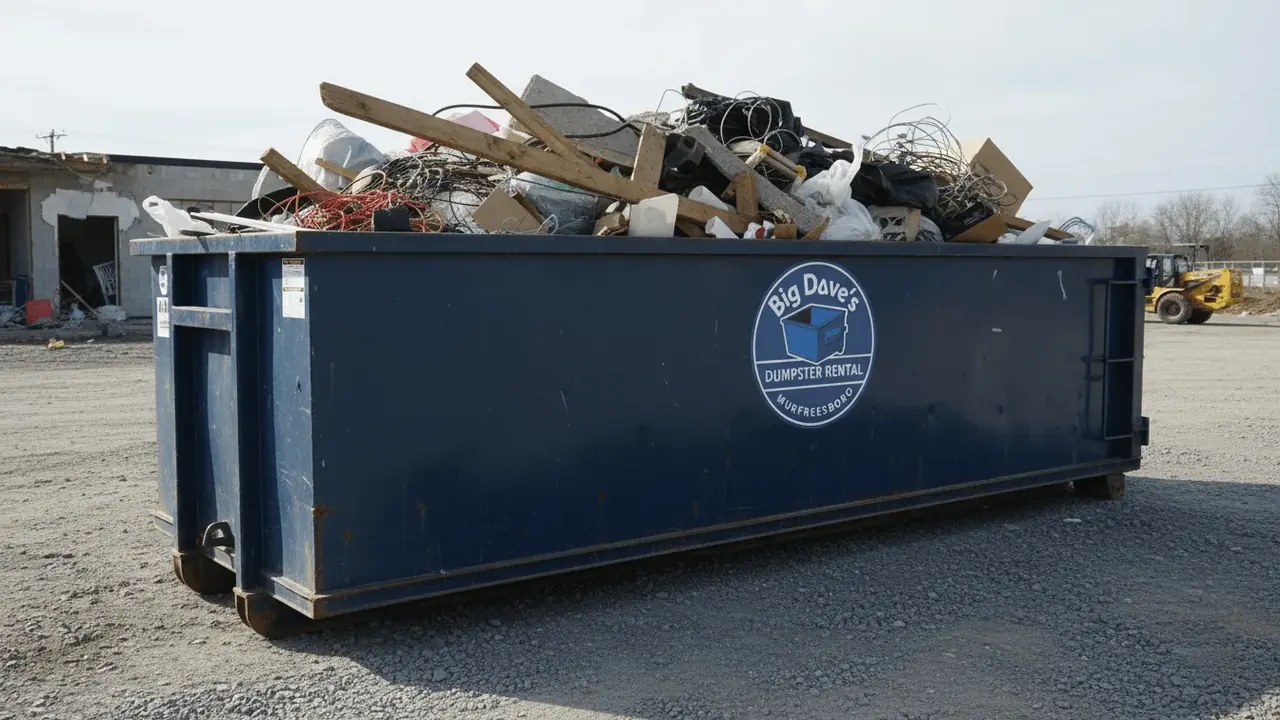
physical volume in a full-house cleanout actually ends up — worn mattresses, broken furniture,
water-damaged boxes, old carpet, and general household debris that isn't worth anyone's time to sell
or donate. This is exactly what a dumpster rental for estate
cleanouts is built for.
Sizing a Dumpster for a Full-House Cleanout
This is the question we get asked most by Murfreesboro families in the middle of a cleanout: "how big
a dumpster do I actually need for an entire house?" It depends on the size of the home and how much
is being kept versus cleared, but here's a general guide based on the homes we serve around Rutherford
County. For a full breakdown of every size we offer, see our dumpster
sizes page.
When in doubt, size up one tier — estate cleanouts almost always produce more disposal volume than
families initially estimate, and closets, attics, and garages tend to be the most underestimated
spaces in the house. A slightly larger dumpster delivered once is also almost always cheaper and less
stressful than filling a smaller one and needing a second rental for what's left. Murfreesboro
driveways and lots vary quite a bit, from tighter in-town lots near the square to larger properties
out toward Blackman, Rockvale, or Walter Hill, so tell us your driveway situation and we'll help you
pick a size and placement that fits. For the full walkthrough, see our
general sizing guide.
What Can — and Can't — Go in the Dumpster
Most of what comes out of a house during an estate cleanout is exactly what a roll-off dumpster is
designed for: furniture, mattresses, boxed household goods, carpet, small appliances, yard debris, and
general clutter. A few categories need a different path. Household hazardous waste — old paint,
solvents, pesticides, motor oil, propane tanks, and similar chemicals — should not go in a rental
dumpster; Rutherford County and the City of Murfreesboro both maintain solid-waste guidance for
residents, so check current rules or call ahead if a home has a garage full of decades-old chemicals,
which is extremely common in an older estate. Older TVs, computer monitors, and some other electronics
are frequently restricted from standard disposal and are better routed to an electronics recycler.
Appliances with refrigerant, like refrigerators and some older air conditioning units, often need
special handling — ask us when you book. Tires and certain batteries generally need a separate
disposal path as well. If you're not sure whether something belongs in the dumpster, ask us before it
goes in — it's a much easier conversation on the front end than after the container is loaded.
A Practical Room-by-Room Order of Operations
Working room by room, rather than jumping around the house, keeps momentum up and makes it easier to
see progress. An order that works well for most estate cleanouts:
Home office / desk areas — documents and financial paperwork live here; get this
handled first per the section above
Bedrooms — often the most sentimentally loaded rooms; give these the most time and
the least time pressure
Kitchen and living/dining areas — these move quickly once decisions are made; most
items sort cleanly into donate or dispose, and larger furniture should have a plan before it's moved,
since moving big pieces twice is exhausting
Closets and storage areas — consistently take longer than expected; budget extra
time
Garage, attic, basement, and shed — usually the highest volume of pure disposal
material (tools nobody kept, old paint cans, broken equipment, holiday decorations, boxes never
reopened); this is typically where the dumpster fills up fastest
Yard and exterior — outdoor furniture, garden equipment, and any accumulated yard
debris
Coordinating a Multi-Family Cleanout Without the Conflict
When siblings or extended family are splitting up a parent's or grandparent's belongings, a few
simple ground rules head off most of the friction we hear about from families: agree in advance on how
contested items get decided (a rotation, a private list-and-bid system, or a neutral third party all
work — the method matters less than agreeing on it before you start), take photos of major rooms before
anything is moved, and set aside a clearly marked "undecided" pile rather than letting contested items
stall the whole project. And if emotions run high on a given day, it's okay to stop. The dumpster will
still be there tomorrow; family relationships are worth protecting more than a weekend's schedule.
When to Call for a Dumpster — and How We Help
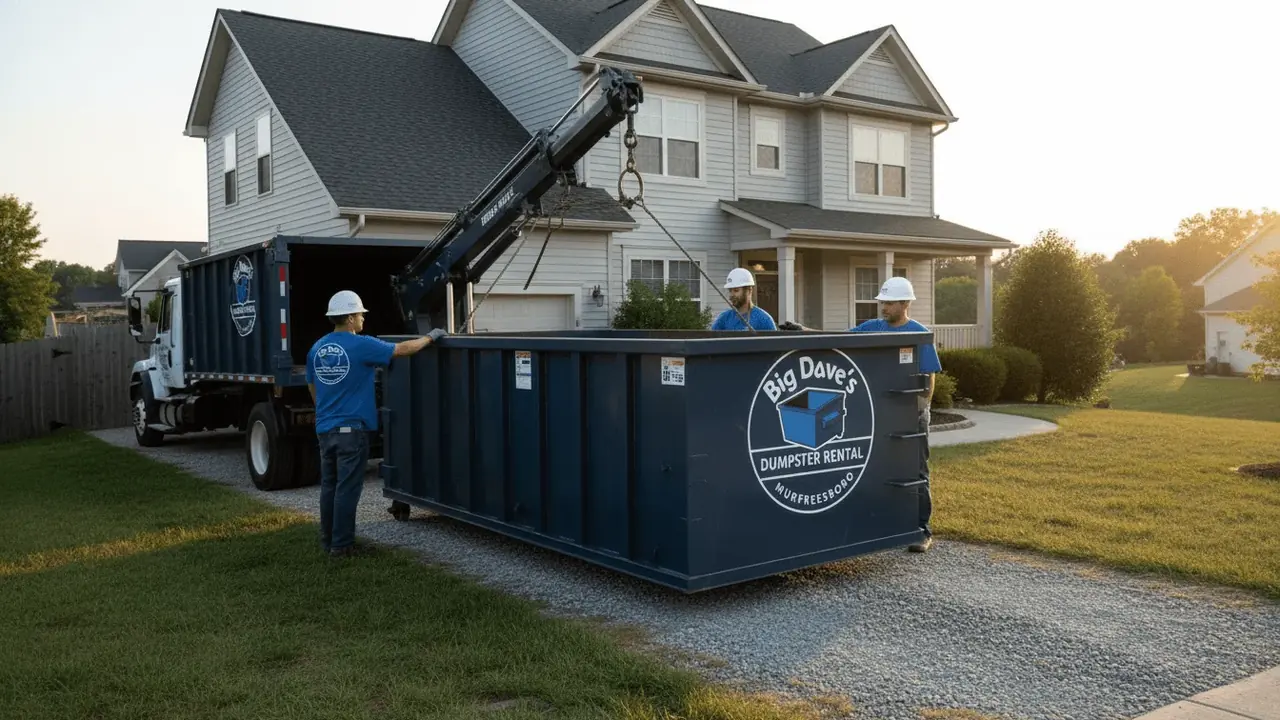
You don't have to wait until everything is sorted to book. A common approach is to schedule the
dumpster to arrive on the first cleanout weekend so it's sitting there ready as items get sorted,
rather than sorting everything first and renting the container only at the end. We offer
straightforward, no-pressure phone conversations about sizing (we'd rather talk you through it for
five minutes than have you guess and end up needing a second rental), flexible rental windows for
multi-weekend projects, and placement guidance for Murfreesboro driveways and lots. If timing is
tight, ask about our same-day dumpster rental. And if the job is
smaller — a single room, or items that need to be carried out rather than self-loaded — our
junk removal service may be a better fit than a dumpster
rental.
Take Care of Yourself Through the Process
It's easy to treat an estate cleanout as a checklist to get through as fast as possible. It's worth
saying plainly: this is genuinely hard, often quietly grief-filled work, even when it's framed as
"just cleaning out a house." Give yourself breaks, keep a few items that don't make logical sense to
keep but matter anyway, and ask for help — whether that's family, friends, or bringing in
professionals for the physical hauling so you can focus on the decisions that actually need a family
member's judgment.
When you're ready to talk through sizing, timing, or placement for your own cleanout, call Big Dave's
Dumpster Rental at (629) 238-032 or visit our
contact page. We serve Murfreesboro and the surrounding Rutherford County
communities, and we've helped enough local families through this process to know how to make the
logistics side of it as easy as possible.
Big Dave's Dumpster Rental
Written by the team that runs the trucks out of our yard on 1018-1024 Seals Way in Murfreesboro. We haul
roll-offs across Rutherford County, Cannon County and the wider Murfreesboro area every week. Questions about your own job?
Call (629) 238-032.
Talk to a real person
Ready to book a container in Murfreesboro?
Call and describe the job. Flat price, stated tonnage, and a delivery time on the same call.
How long does a typical estate cleanout take in Murfreesboro?
It varies with the size of the home and how much sorting is needed, but most full-house cleanouts take one to four weekends. A smaller, already-decluttered home can sometimes be cleared in a single long weekend, while a larger home with decades of belongings across a garage, attic, and basement often needs several weekends spread out so the family isn't rushed through sentimental decisions.
What size dumpster do I need to clean out an entire house?
For a standard 3-bedroom home, a 20-yard dumpster is the most common fit. Smaller homes or apartments often do fine with a 15-yard, while larger homes with a full basement, attic, and garage typically need a 30-yard. If you're unsure, it's usually better to size up one tier — estate cleanouts consistently produce more volume than families expect. Call us and we'll help you size it based on your specific home.
Can I put furniture, mattresses, and appliances in the dumpster?
Yes — furniture, mattresses, and most small appliances are exactly what a roll-off dumpster is built for during an estate cleanout. Appliances containing refrigerant, like refrigerators and some air conditioning units, may need special handling, so let us know what you're disposing of when you book so we can advise on the right approach.
What should NOT go in an estate cleanout dumpster?
Household hazardous waste such as old paint, solvents, pesticides, motor oil, and propane tanks shouldn't go in a rental dumpster — these need to be handled through proper hazardous waste disposal channels per Rutherford County and City of Murfreesboro guidance. Tires, certain batteries, and some electronics also typically need a separate disposal path. When in doubt, ask us before it goes in.
Should I sort everything before renting a dumpster, or can it arrive first?
You don't need to finish sorting before scheduling delivery. Many Murfreesboro families have the dumpster arrive at the start of the first cleanout weekend so it's ready as items are sorted into keep, donate, sell, and dispose piles, rather than sorting everything first and renting at the very end. We offer flexible rental windows so the container can stay on-site through a multi-weekend project.
Roofing debris is heavy, not just bulky — which means the right dumpster for a tear-off in Rutherford County is usually about weight first, volume second. Here's how to get the sizing right.
A straight answer on same-day dumpster delivery in Murfreesboro: cutoff times, service radius, what to prep before the truck shows up, and the situations where same-day service actually saves the day.
Two very different services get lumped together constantly. Here's how Murfreesboro homeowners can tell which one actually fits their project — and when it makes sense to use both.