Dumpster Rental Cost Factors in Murfreesboro, TN | Big Dave's
Dumpster rental pricing isn't one flat number — it depends on size, weight, rental length, debris type, delivery location, and permit needs. Here's how each factor actually works in Murfreesboro.
8 min readUpdated 2026-02-07By Big Dave's Dumpster Rental
If you've started calling around for a roll-off dumpster in Murfreesboro, you've probably noticed something frustrating: nobody gives you a straight number until you tell them what you're actually doing. That's not a sales tactic — it's because dumpster rental pricing genuinely depends on several moving parts at once, and a quote that ignores any one of them is a quote you can't trust. Rather than throw out figures that might be stale by the time you read this (or that never applied to your project in the first place), this guide walks through the real factors that move the price up or down, so you know what questions to ask and what to expect when you call for a quote.
Why There's No Single "Dumpster Rental Price" in Rutherford County
Every hauler in Middle Tennessee prices roll-off rentals a little differently, and even within one company, the number changes project to project. That's normal — a dumpster rental isn't a flat-rate product like a pizza. It's closer to a small logistics job: a truck has to drive a container to your address, you keep it for a period of time, it comes back full, and someone pays a disposal facility to take the material off your hands. Every one of those steps has its own cost driver, and they stack together into your final quote. Understanding each one helps you compare quotes apples-to-apples instead of just picking whichever number sounds lowest on the phone.
Factor 1: Container Size
Size is the most obvious lever, and it's usually the first question a dumpster company asks. Roll-off dumpsters are sized in cubic yards of volume, and Big Dave's Dumpster Rental offers the full common range used across residential and commercial jobs in Murfreesboro:
The relationship isn't always perfectly linear — sometimes a 20-yard and a 30-yard price closer together than you'd expect, because the truck trip, drop, and pickup cost the same regardless of size, and only the disposal portion scales with volume. That's also why "just get the bigger one to be safe" isn't automatically the expensive choice it sounds like; occasionally it's the better value once you account for the cost of a second haul if you underestimate. Our dumpster sizes guide breaks down dimensions and typical loads in more detail, and our sizing guide can help you land on the right container before you request pricing.
Factor 2: Weight and Tonnage
This is the factor most first-time renters underestimate, and it's arguably more important than size for certain materials. Most roll-off rentals include a set weight allowance bundled into the base price — essentially a certain number of tons you can fill the container with before extra charges apply. Go over that allowance and you'll typically see an overage charge calculated per ton, billed after the container is weighed at the disposal facility.
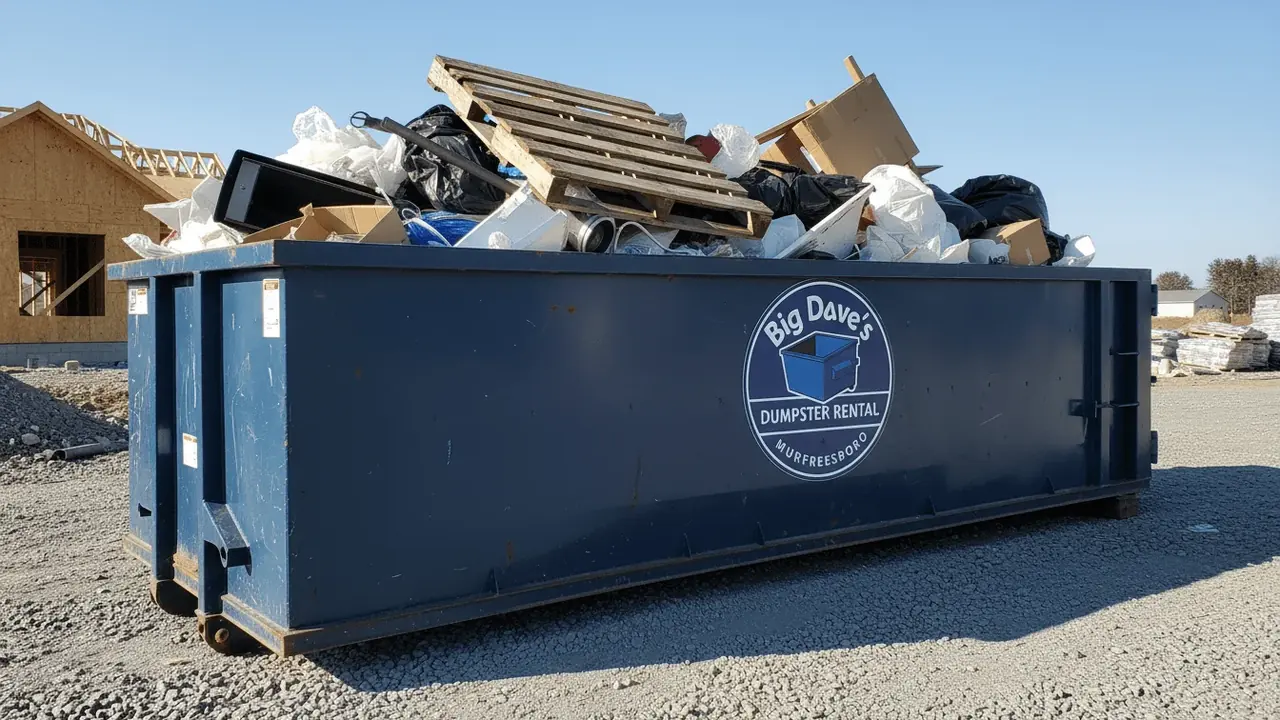
Why does this matter so much in Murfreesboro specifically? Because debris type and weight don't move together the way you'd assume. A 20-yard dumpster stuffed with old furniture, mattresses, and cardboard might weigh far less than its weight allowance, even packed to the brim. That same 20-yard container filled with concrete, brick, roofing shingles, or wet yard debris can hit its tonnage limit while still looking half-empty. Shingles in particular are deceptively heavy — a modest roofing tear-off can generate several tons of material in a container that doesn't look full at all. This is exactly why heavy, dense materials like concrete, block, brick, dirt, and asphalt are usually priced or handled differently — sometimes in a dedicated smaller container built for weight rather than volume. If your project involves any of these materials, mention it when you call so the quote reflects tonnage realistically instead of surprising you later.
Factor 3: Rental Period (How Long You Keep It)
Most roll-off rentals include a standard rental window as part of the base price — commonly measured in days. If your project wraps up within that window, you're done. If it runs longer — a remodel that stalls waiting on materials, a cleanout that takes an extra weekend, a construction project on an extended timeline — expect a per-day charge for the extra time the container sits on your property.
The practical takeaway: be realistic about your timeline when you book, and if you know a project is going to stretch (a big estate cleanout, a slow-moving renovation), ask about extended rental terms up front rather than assuming the standard window will be enough. It's also worth asking whether swapping a full container for an empty one mid-project (a "swap-out") is priced differently than a single extended rental — for big jobs generating more debris than one container can hold, a swap can sometimes be more efficient than paying for extra days on an overfull bin.
Factor 4: Debris Type
Not all trash is priced the same, and this ties back into the weight discussion above. Broadly, debris tends to fall into a few pricing tiers:
General household/construction debris — mixed loads like furniture, drywall, cabinetry, flooring, general remodel waste. This is the most common and typically the most straightforward to price.
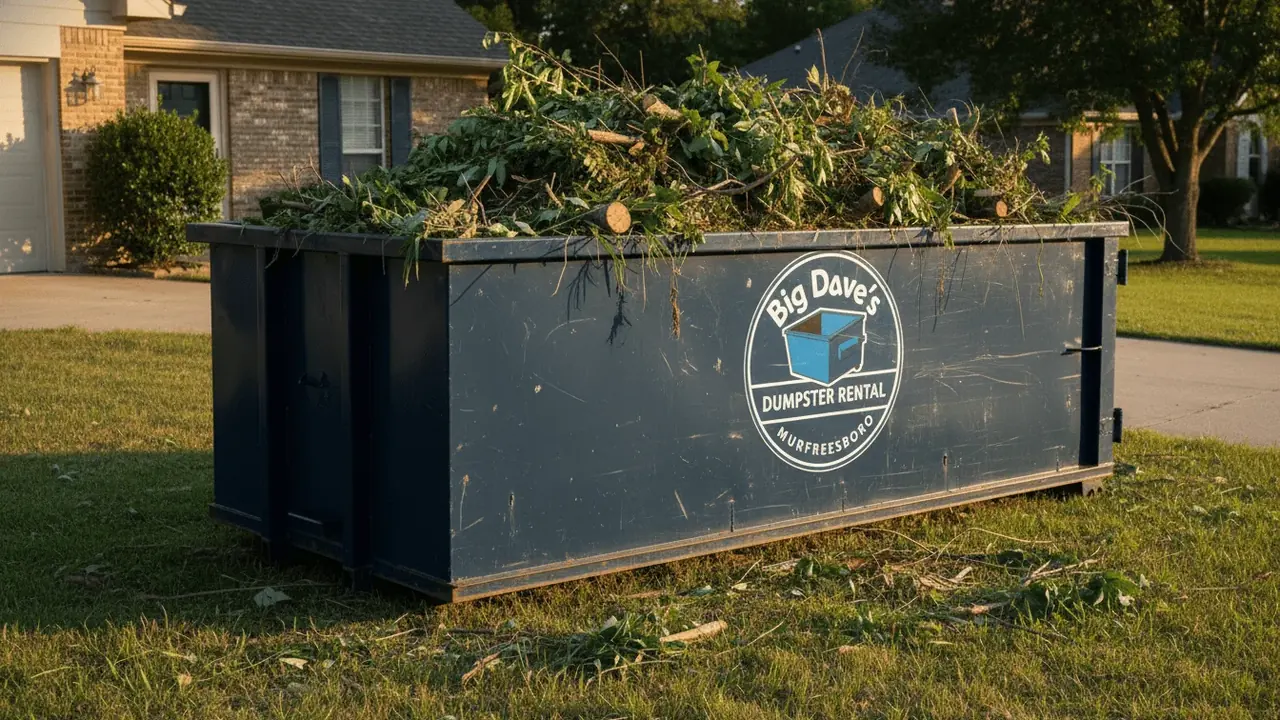
Yard and organic debris — branches, brush, sod, leaves. Often lighter by volume but can be bulky; some haulers price this differently than mixed construction debris because it's handled at different facilities.
Heavy/dense material — concrete, brick, block, asphalt, dirt, tile. Because these are so heavy relative to their volume, they're frequently restricted to specific container sizes or priced with a lower weight threshold, as covered on our concrete and heavy debris page.
Prohibited or restricted items — items like tires, batteries, paint, chemicals, appliances with refrigerants, and similar hazardous or regulated materials generally can't go in a standard roll-off at all, regardless of price, due to Tennessee disposal regulations. Our Tennessee debris disposal rules guide covers what's allowed and what isn't in more detail.
Telling your hauler exactly what's going into the dumpster — not just "cleanout stuff" — is one of the simplest ways to get an accurate quote instead of a surprise adjustment at pickup.
Factor 5: Delivery Location and Distance
Where the dumpster needs to go affects price too. A roll-off truck has to physically drive from the yard to your property, place the container, and later return to haul it away — so distance from the point of dispatch is a real, tangible cost input, not an arbitrary fee. A delivery in central Murfreesboro, close to Big Dave's Seals Way location near I-24, is a shorter trip than a delivery out toward the edges of Rutherford County or into a neighboring county.
Site conditions at the delivery address matter too. A flat, paved driveway with clear overhead access is the easiest drop. A steep or gravel driveway, tight urban lot, overhead power lines, or a placement that requires careful maneuvering can all affect how a job is handled — worth mentioning when you book so the crew arrives prepared. If you're not sure whether your property qualifies for standard delivery, it's a quick question to ask when you call.
Factor 6: Permit Requirements
If a dumpster is going to sit in your own driveway or on your own property, a permit generally isn't needed. But if there's no room on-site and the container has to sit on a public street or right-of-way, Murfreesboro or Rutherford County permitting requirements may come into play, and that can be an added cost and an added step in the timeline. This isn't a Big Dave's-specific quirk — it's standard practice in most Tennessee municipalities, and it exists for genuine safety and traffic reasons, not as a revenue grab. Our dumpster permit and street placement guide walks through when a permit is likely required and how to sort it out before delivery day, so it doesn't hold up your project.
Putting the Factors Together: How to Get an Accurate Quote
Because so many of these factors interact, the fastest way to a real number isn't guessing — it's giving a Murfreesboro hauler enough detail to price your specific job. When you call, it helps to have answers ready for:
What type of project is this — cleanout, remodel, roofing, new construction, yard work?
What's the primary debris — general mixed waste, yard debris, or heavy material like concrete or shingles?
Roughly how much material are you dealing with (a garage's worth, a full house, a roof tear-off)?
How long do you realistically expect to need the container?
Where will it sit — driveway, yard, or street — and is access straightforward?
With those details, a company can give you a real quote instead of a rough range, and you'll avoid the two most common surprises in dumpster rental: unexpected overage charges for weight, and unexpected extra-day charges for a rental that ran long. Big Dave's Dumpster Rental prices Murfreesboro and Rutherford County jobs based on these same factors, and because it's a call-only, locally based operation, you're talking directly to people who know the area rather than working through a national call center that has never seen your street.
A Few Practical Ways to Keep Costs Reasonable
A handful of habits make a real difference in the final bill, regardless of which company you rent from:
Match the size to the job honestly. Undersizing often costs more in the end — either from a second rental or from trying to overfill a container past its safe fill line. Our real project size examples guide shows sizing decisions from actual job types.
Separate heavy debris when you can. If a project has both light material (furniture, drywall) and heavy material (concrete, tile), ask whether it makes sense to handle them as separate loads rather than one mixed container that trips the weight allowance early.
Plan your timeline before you book rather than after delivery, so you're renting for the period you actually need.
Ask about placement before delivery day. Confirming driveway vs. street placement in advance avoids a permit scramble mid-project.
Don't guess on what's allowed. A quick question about a specific item (an old water heater, leftover paint cans, a stack of tires) takes thirty seconds and can save a return trip or a rejected load.
Get a Real Quote for Your Murfreesboro Project
Pricing factors are useful for planning, but nothing beats a conversation with a local hauler who can price your actual job. Big Dave's Dumpster Rental serves Murfreesboro and the surrounding Rutherford County area, with size options from a compact 10-yard up through a 40-yard for major construction and demolition work. Browse the full dumpster sizes lineup, check out all rental services, or reach out directly through the contact page to talk through your project and get pricing that actually reflects what you need.
Big Dave's Dumpster Rental
Written by the team that runs the trucks out of our yard on 1018-1024 Seals Way in Murfreesboro. We haul
roll-offs across Rutherford County, Cannon County and the wider Murfreesboro area every week. Questions about your own job?
Call (629) 238-032.
Talk to a real person
Ready to book a container in Murfreesboro?
Call and describe the job. Flat price, stated tonnage, and a delivery time on the same call.
Why won't a dumpster company just give me a flat price over the phone?
Because a flat price without knowing your project would either overcharge simple jobs or undercharge heavy/long ones. Size, weight, rental length, debris type, delivery location, and permit needs all factor into an accurate quote, so a few quick questions about your specific project lead to a number you can actually rely on instead of a generic range that may not apply.
What's the difference between a size-based price and a weight-based charge?
The base rental price generally covers a specific container size plus a bundled weight allowance. If your debris is light and bulky (furniture, cardboard, general household items), you're likely to fill the volume before hitting the weight limit. If your debris is dense (concrete, shingles, dirt, brick), you can hit the weight allowance well before the container looks full, which is when overage charges can apply. Knowing which situation you're in helps you pick the right size and avoid surprises.
Does it cost more to keep a dumpster longer than planned?
Most rentals include a standard rental period in the base price. Keeping the container beyond that window typically adds a per-day charge. If you expect your project to run long — a slow renovation, a big estate cleanout, or a construction job on an extended schedule — it's worth discussing an extended rental term when you book rather than assuming the standard window will cover you.
Will I need a permit for a dumpster in Murfreesboro?
If the container sits entirely on your own property — driveway, yard, or lot — a permit generally isn't required. If there's no space on-site and it needs to sit on a public street or right-of-way, Murfreesboro or Rutherford County permitting rules may apply. See our dedicated guide on dumpster permits and street placement for details on when this comes up and how to handle it before delivery day.
What information should I have ready when I call for a quote?
Have a general sense of your project type (cleanout, remodel, roofing, construction, yard work), the main type of debris involved, roughly how much material you're dealing with, how long you expect to need the container, and where it will be placed on your property. That combination lets a local hauler like Big Dave's Dumpster Rental price your Murfreesboro job accurately on the first call.
Tennessee debris disposal rules come from three different layers of government. Here's who regulates what, which items are off-limits in a rental dumpster, and where Rutherford County residents can legally take the rest.
Ever wonder what happens after your roll-off gets hauled away? Here's a straight answer on where construction debris, household junk, and recyclables actually end up in Rutherford County — and why the county opened a new transfer station in 2025.
Placing a dumpster in your driveway usually needs no permit. Placing one at the curb or in the street is a different story. Here's how Murfreesboro's right-of-way rules work, plus why Tennessee 811 matters even for a dumpster that never touches the ground with a shovel.