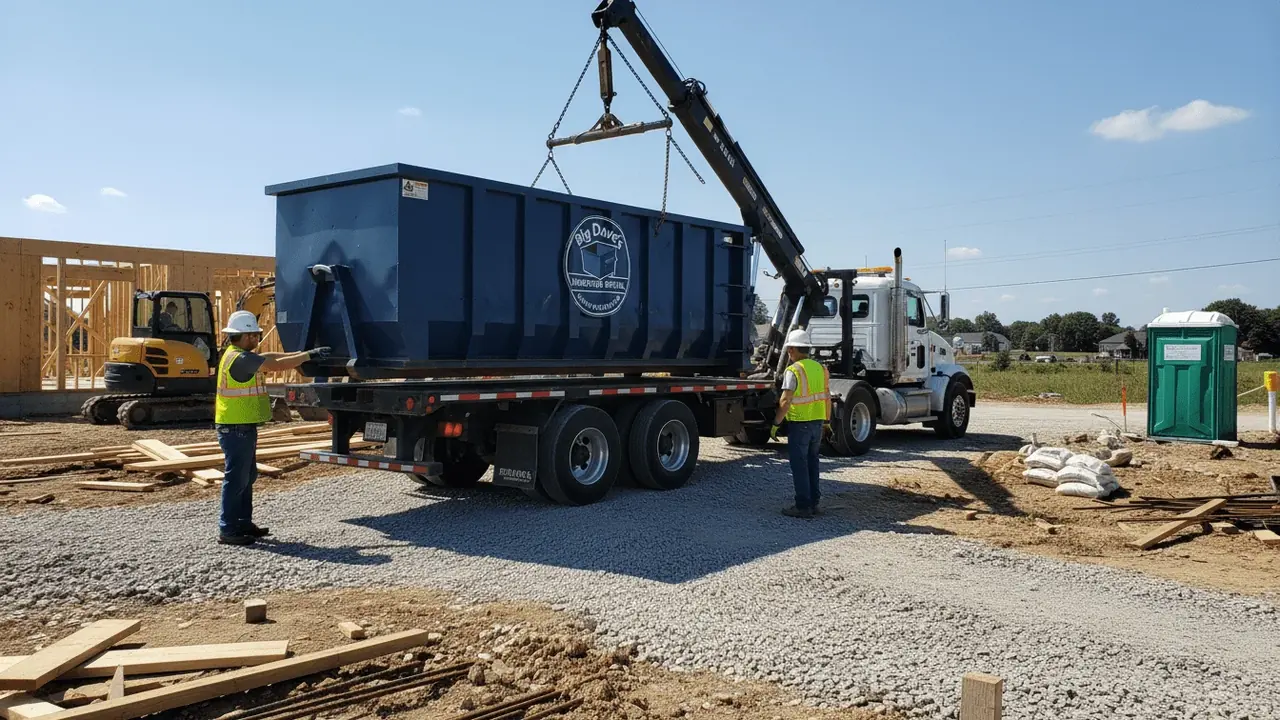
Ever wonder what happens after your roll-off gets hauled away? Here's a straight answer on where construction debris, household junk, and recyclables actually end up in Rutherford County — and why the county opened a new transfer station in 2025.
9 min readUpdated 2026-02-17By Big Dave's Dumpster Rental
Most people who rent a dumpster never think past the moment the roll-off truck pulls away with a full load. But where that debris actually goes matters — for your wallet, for what you're allowed to throw in a dumpster in the first place, and for understanding why local disposal capacity has become a genuinely big deal in Rutherford County over the past couple of years. This guide walks through the real facilities, the real process, and the real local situation, without any guesswork.
The Short Version: Two Main Destinations
Almost everything that leaves a Rutherford County job site or driveway in a roll-off dumpster ends up at one of two places:
Rutherford County's Solid Waste Transfer Station — a facility on Landfill Road in Murfreesboro that opened in 2025, where waste is weighed, sorted, and consolidated before being trucked onward.
Middle Point Landfill — the region's actual landfill, a large permitted facility on E Jefferson Pike in Murfreesboro that has served Rutherford County and the surrounding area for decades.
Licensed haulers — including local dumpster rental companies like ours — deliver loads to whichever facility makes sense for the material, the account arrangement, and current capacity. Recyclable material, yard waste, and certain bulky items can be diverted along the way instead of landfilled outright, which is part of why sorting your load (even loosely) is worth the effort.
Rutherford County's Solid Waste Transfer Station
In 2025, Rutherford County opened its own Solid Waste Transfer Station at 6025 Landfill Road in Murfreesboro. A transfer station isn't a landfill — it's a staging facility. Trucks and dumpster haulers pull in, waste is weighed on a scale, offloaded, and then consolidated into larger loads for transport to a permitted landfill. The county built this facility specifically to give itself more control over where the region's waste ends up, rather than relying entirely on one privately-owned landfill.
The transfer station operates on a tonnage-based fee structure — cash customers without an account pay a flat per-ton rate, while established commercial accounts (the kind licensed haulers typically carry) get tiered pricing based on monthly volume. It's open on a weekday and Saturday schedule with early-morning hours geared toward commercial and contractor traffic, plus a mid-morning window better suited to residential and non-commercial drop-off. Site rules require high-visibility clothing inside the facility, and certain waste streams — manifested hazardous loads and other "special waste" categories — aren't accepted there at all and have to go through separate, permitted channels.
For a homeowner clearing out a garage or a contractor closing out a renovation, none of this operational detail matters day to day — your hauler handles the trip. But it's useful context: the fee your dumpster company pays per ton at the transfer station is a real, direct input into what a rental costs, which is part of what we break down in our dumpster rental cost guide.
Middle Point Landfill: The Region's Landfill — and Why It's Been in the News
Middle Point Landfill sits at 750 E Jefferson Pike in Murfreesboro, an 808-acre permitted facility operated by BFI Waste Systems of Tennessee, a Republic Services company. It has been the primary landfill serving Rutherford County and a wide swath of Middle Tennessee for years, handling thousands of tons of waste daily from municipal, commercial, and construction sources across the region.
Here's the part that's genuinely relevant if you follow local news: Middle Point has been approaching capacity, and its owner has pursued a significant vertical expansion to extend the site's usable life. That proposal has drawn real, active opposition from the City of Murfreesboro and became the subject of formal legal action — including a court order that paused part of the expansion review process. As of this writing, the expansion's future is still being litigated, and the outcome isn't settled. This is exactly the kind of situation where you should check current local news rather than take any single source's word for it if the landfill's status matters to your project timeline — but the short version is: regional landfill capacity is a real, active concern here, which is a big part of why the county built its own transfer station as an alternative outlet rather than staying dependent on one aging facility.
What this means practically for anyone renting a dumpster: nothing changes about how you use your rental. It just explains why "where does the trash go" is a live, evolving local story here rather than a settled fact — and why local haulers who know the current landfill and transfer station situation (rather than working off outdated assumptions) tend to give you a more accurate quote and pickup timeline.
What Happens After Big Dave's Picks Up Your Dumpster
When we haul a loaded roll-off away from a Murfreesboro, Smyrna, La Vergne, or Rutherford County property, here's the real sequence:
The load gets weighed. Both the county transfer station and Middle Point Landfill charge by the ton, which is why overloading a dumpster (piling debris above the fill line, or loading heavy material like concrete and shingles past the weight limit) triggers overage fees — you're paying for the actual tonnage, not a flat volume guess.
Obviously recyclable bulk material gets diverted where practical. Clean cardboard, scrap metal, and similar single-material loads can often be routed to recycling rather than landfilled, which is one reason keeping different debris types reasonably separated (even just "concrete in one dumpster, general junk in another") helps.
The rest goes to the transfer station or directly to the landfill, depending on the load type, current account routing, and which facility is accepting that category of waste that day.
This is also why certain materials get their own dedicated dumpster type in the first place. Heavy debris like concrete, brick, and asphalt is billed and handled completely differently than mixed household junk — see our concrete & heavy debris dumpster page for how that works, or our demolition debris service if you're clearing a structure rather than doing a routine cleanout.
Recycling Drop-Off Options in Rutherford County
Separate from dumpster/landfill disposal, Rutherford County operates a network of recycling convenience centers across the county for household use. These accept ordinary household trash and recyclable materials (with recyclables expected to be separated out before you arrive), plus a small number of bulk items per visit — think a couch or a mattress, not a truckload of renovation debris. Hours are limited (the centers are closed a couple of days a week and run shorter hours on weekends), and each visit is capped at roughly one pickup-truck load.
The important thing to know if you're weighing a dumpster rental against a DIY dump run: Rutherford County's recycling convenience centers explicitly do not accept construction materials or demolition debris. They're built for household waste and curbside-style recyclables, not renovation, roofing, or demolition loads. If you're tearing out a deck, re-roofing a house, or gutting a bathroom, that debris needs to go through a hauler to the transfer station or landfill — not a county recycling center. This is one of the more common misunderstandings we run into, and it's a big part of why a dumpster rental ends up being the practical option for any real construction or cleanout project rather than a series of truck trips.
Within Murfreesboro city limits, the City itself also runs its own solid waste and recycling collection program for residents, separate from the county's centers — worth knowing if you're inside the city versus out in unincorporated Rutherford County, since your regular trash pickup may come from a different provider than what handles your dumpster's final destination.
Material
Goes in a rented dumpster?
Where it actually ends up
General household junk, furniture, cleanout debris
Yes
Transfer station or landfill
Construction & demolition debris (drywall, lumber, framing)
Yes
Transfer station or landfill
Concrete, brick, asphalt, heavy debris
Yes, in a dedicated heavy-debris dumpster
Landfill or dedicated aggregate recycling, priced by weight
Periodic TDEC/county mobile collection events only
Tires
No
Separate disposal — not accepted loose in a roll-off
Electronics, TVs, appliances with refrigerant
No
Separate e-waste/appliance recycling, not standard dumpster loads
Small household bulk items (single couch, mattress)
Either a dumpster or a county recycling center
Either destination works for a single item
What Should NOT Go in Your Dumpster
Because both the transfer station and the landfill are permitted facilities with real environmental regulations behind them, certain materials are off-limits for a standard roll-off no matter who you rent from. Household hazardous waste — old paint, solvents, pool chemicals, car batteries, pesticides — isn't accepted through routine dumpster disposal. Instead, the Tennessee Department of Environment & Conservation (TDEC) periodically organizes mobile household hazardous waste collection events for Rutherford County residents, typically announced a few weeks ahead through the county and city. If you have a garage full of old chemicals as part of a cleanout, plan to hold those items for one of these events rather than tossing them in with everything else.
Tires and appliances containing refrigerant (refrigerators, freezers, some air conditioning units) also need separate handling — refrigerant-bearing appliances typically require the refrigerant to be professionally recovered before disposal, which is a different process than tossing an old fridge in a dumpster. If your project includes any of these items, mention it when you book so we can tell you the cleanest way to handle them alongside your rental — see our FAQ page for more on what we can and can't take.
Why This Matters for Sizing and Cost
Understanding where your debris goes isn't just trivia — it directly affects two things you actually care about: how big a dumpster you need, and what it costs. Because both regional facilities bill by weight, dense material (concrete, roofing shingles, wet debris) fills a dumpster's weight allowance long before it fills the box visually. That's why a 10-yard dumpster full of shingles can cost more in overage fees than a 20-yard dumpster full of lightweight household junk. If you're not sure what size fits your project and its material mix, our dumpster sizing guide walks through it project by project, and our full dumpster sizes page lays out dimensions and typical use cases side by side.
It's also worth understanding the disposal rules that govern what's legal to put out at all — Tennessee and Rutherford County have specific regulations around debris handling that go beyond what a landfill will physically accept. We cover those in detail in our Tennessee debris disposal rules guide.
The Bottom Line
When Big Dave's picks up a dumpster anywhere in Murfreesboro or greater Rutherford County, your debris goes through a real, regulated system — weighed at either the county's Solid Waste Transfer Station on Landfill Road or Middle Point Landfill on E Jefferson Pike, sorted where practical, and disposed of according to actual state and local rules. You don't have to track any of this yourself; that's what a licensed local hauler is for. But if you've ever wondered what actually happens after the truck drives off, now you know it's not a mystery — and it's not a guess.
Have a project with an unusual mix of materials, or questions about what a specific item costs to dispose of? Contact Big Dave's Dumpster Rental and we'll walk you through it before you book.
Big Dave's Dumpster Rental
Written by the team that runs the trucks out of our yard on 1018-1024 Seals Way in Murfreesboro. We haul
roll-offs across Rutherford County, Cannon County and the wider Murfreesboro area every week. Questions about your own job?
Call (629) 238-032.
Talk to a real person
Ready to book a container in Murfreesboro?
Call and describe the job. Flat price, stated tonnage, and a delivery time on the same call.
Does my dumpster debris go straight to Middle Point Landfill?
Not always. Depending on the load and routing, debris may go directly to Middle Point Landfill on E Jefferson Pike, or first pass through Rutherford County's Solid Waste Transfer Station on Landfill Road, which consolidates loads before onward transport. Either way, it ends up at a properly permitted facility.
Can I take construction debris to a county recycling center instead of renting a dumpster?
No. Rutherford County's recycling convenience centers explicitly do not accept construction materials or demolition debris — they're for household trash and sorted recyclables only, with a limit of about one pickup-truck load per visit. Any real renovation, roofing, or demolition project needs a licensed hauler and a dumpster.
What can't I put in a rented roll-off dumpster?
Household hazardous waste (paint, solvents, chemicals, batteries), loose tires, and appliances containing refrigerant aren't accepted in standard dumpster loads. Hazardous items typically need to wait for a periodic TDEC/county mobile collection event, and refrigerant-bearing appliances need the refrigerant professionally recovered first. Ask us when you book if you're unsure about a specific item.
Why did Rutherford County build a new transfer station?
The county opened its Solid Waste Transfer Station in 2025 partly to reduce dependence on Middle Point Landfill, which has been approaching capacity and has been involved in an active, ongoing legal dispute over a proposed expansion. The transfer station gives the county more direct control over where regional waste is routed.
Does it cost more if my debris is heavy, like concrete or shingles?
Yes. Both the county transfer station and Middle Point Landfill charge by weight (tonnage), not by volume. Dense materials like concrete, brick, and wet roofing shingles fill a dumpster's weight limit well before the box looks full, which is why heavy-debris loads are priced and sized differently than general household junk.
Placing a dumpster in your driveway usually needs no permit. Placing one at the curb or in the street is a different story. Here's how Murfreesboro's right-of-way rules work, plus why Tennessee 811 matters even for a dumpster that never touches the ground with a shovel.
Every May and August, thousands of MTSU students clear out dorms and rental houses across Murfreesboro. Here's how renters, parents, and landlords use a dumpster rental to handle move-out season without the truck-bed shuttle runs.
New subdivisions, commercial pads, and infill projects are reshaping Murfreesboro and Rutherford County as Nashville's growth pushes south along I-24. Here's what that means for contractors planning debris removal, and how to size a roll-off correctly for a new-build job.